
The ISA-18.2 Alarm Management Lifecycle
This article describes the alarm management lifecycle defined in ISA-18.2 and explains how lifecycle governance is used to design, implement, maintain, and sustain alarm system performance over time. It focuses on lifecycle structure and intent rather than detailed implementation methods.

Highlights
|
Alarm management is not a one-time configuration effort. The ISA 18.2 lifecycle defines a governed process that spans system design, operation, and ongoing change to prevent alarm system degradation as processes and operating conditions evolve.
The alarm philosophy establishes the rules, objectives, and performance expectations that guide all lifecycle stages. Without a clear and enforced philosophy, alarm management activities lack consistency and cannot be sustained over time.
Effective alarm systems depend on ongoing performance monitoring, formal management of change, and periodic audit. Without these governance mechanisms, even well-designed alarm systems will gradually drift toward alarm overload.
This article builds on the principles discussed in Alarm Management in Industrial Control Systems[1] and focuses specifically on the structure and governance of the ISA-18.2 alarm management lifecycle[2].
Alarm Management is a Lifecycle, Not a One Time Activity
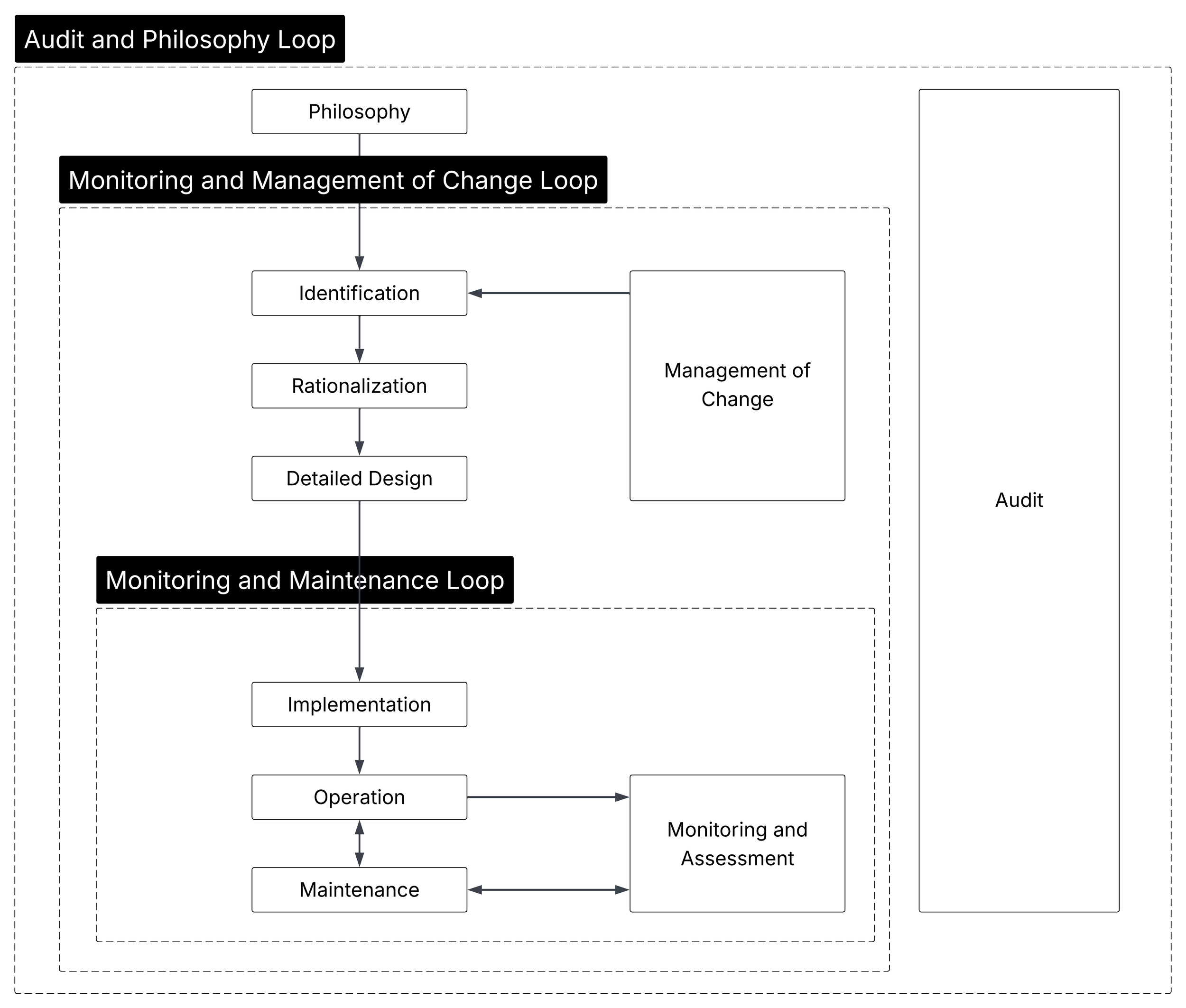
To address this, the ISA-18.2 standard defines an alarm management lifecycle that spans the entire life of the alarm system, from initial philosophy development through ongoing monitoring and periodic audit.
There are three common entry points into this lifecycle:
- Development of an alarm philosophy for new systems.
- Monitoring and assessment of existing alarm performance.
- Audit of alarm systems against defined standards and practices.
Regardless of the entry point, all lifecycle stages are necessary to sustain an effective alarm system.
Alarm Philosophy
Establishing the Foundation
The alarm philosophy is the cornerstone of the entire alarm management lifecycle.
It defines the objectives of the alarm system and establishes consistent rules for alarm definition, prioritization, design, and maintenance.
A well-developed alarm philosophy:
- Defines what qualifies as an alarm.
- Establishes prioritization criteria.
- Specifies performance metrics and targets.
- Defines roles, responsibilities, and required work processes.
The alarm philosophy also serves as a unifying document across multiple units or sites, ensuring consistency in alarm management practices.
Identification and Rationalization
Deciding What Truly Matters
During the identification stage, a list of potential alarms is generated using methods such as process hazard analysis, operating procedure reviews, and design documentation. These potential alarms are typically captured in a master alarm database.
Rationalization is where alarm management delivers the most value. Each potential alarm is reviewed to determine whether it meets the criteria defined in the alarm philosophy. This process ensures that alarms are necessary, justified, and assigned an appropriate priority. The Applying ISA-18.2 Alarm Criteria in Practice[3] article provides a brief overview on what typically constitutes an alarm
Rationalization is often the most time intensive stage of the lifecycle, but it is also the stage that most directly reduces alarm overload and improves system usability.
Design and Implementation
Translating Decisions into the Control System
Once alarms are rationalized, detailed design defines how alarms will be presented to operators. This includes basic alarm attributes, human machine interface design, and any advanced alarming techniques such as state based or logic-based alarming.
Implementation places the alarm system into operation. Operator training is critical at this stage. Operators must understand not only what alarms mean, but how they are expected to respond. Alarm systems are only effective when operators trust them and know how to use them.
Operation, Monitoring, and Continuous Improvement
Changes to alarms must follow a formal management of change process. Periodic audits ensure that alarm systems remain aligned with the alarm philosophy and that unauthorized changes have not degraded performance over time.
Without ongoing monitoring and audit, even well-designed alarm systems will eventually drift back into alarm overload.
Alarm Management as an Operating Discipline
The ISA-18.2 lifecycle exists because alarm systems change continuously. Processes evolve. Equipment is modified. Operating modes expand. Without governance, alarm systems naturally drift toward overload.
Facilities that treat alarm management as a living process consistently see improvements in operator effectiveness, abnormal situation response, and overall process stability. Those that do not often discover the consequences during the least forgiving moments of operation.
Alarm management succeeds when every alarm earns its place on the screen and the operator’s attention. Contact our experts at Stellaro Technologies to start your alarm management lifecycle journey.
References
Stellaro Technologies. (2026). Alarm Management in Industrial Control Systems. [Technical Article]. View Article
International Society of Automation (ISA). (2016). ANSI/ISA-18.2-2016, Management of Alarm Systems for the Process Industries. [Technical Standard]. View ISA Page
Note: Requires ISA membership to view the standardStellaro Technologies. (2026). Applying ISA-18.2 Alarm Criteria in Practice. [Technical Article]. View Article